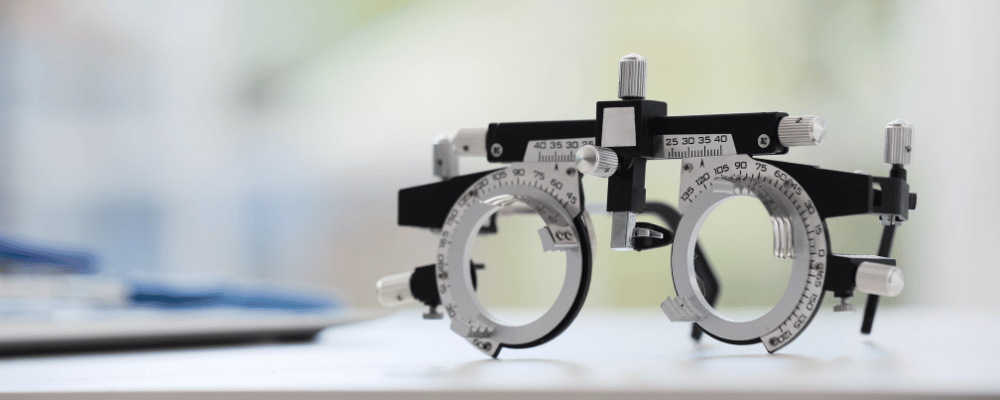
LASIK Enhancement Surgery Explained
LASIK Enhancement Surgery Explained
LASIK enhancement surgery is a secondary laser procedure performed after the original LASIK operation when the desired vision correction has not been fully achieved or vision changes over time. Although most patients never need an enhancement, it can help fine-tune visual results in carefully selected cases.
What Is a LASIK Enhancement?
A LASIK enhancement is an additional laser treatment that refines the original correction.
Its purpose is to:
- Improve remaining nearsightedness, farsightedness, or astigmatism
- Sharpen visual clarity
- Reduce dependence on glasses or contact lenses
- Optimize the long-term outcome of the original procedure
It is not considered a routine part of LASIK but rather an option when medically appropriate.
Why Might an Enhancement Be Needed?
Several factors can lead to a patient needing additional correction.
Common reasons include:
- Mild residual prescription after healing
- Slight under-correction or over-correction
- Natural changes in vision over time
- Healing that differs from the predicted response
These situations are uncommon and do not necessarily indicate that the original surgery failed.
Who Is a Good Candidate?
Not every patient is eligible for an enhancement.
Suitable candidates generally:
- Have stable vision for several months
- Have sufficient corneal thickness remaining
- Have healthy corneas without complications
- Continue to experience a prescription that affects daily life
A comprehensive eye examination is required before recommending retreatment.
When Can an Enhancement Be Performed?
Timing is important because vision must stabilize before additional treatment.
Typical guidelines:
- Minor corrections: usually after 3–6 months
- Higher prescriptions: sometimes longer
- Only after the surgeon confirms healing is complete
Performing an enhancement too early may lead to inaccurate results.
How Is the Procedure Performed?
The technique depends on the condition of the cornea and the original surgery.
Possible approaches include:
- Lifting the original corneal flap (if appropriate)
- Performing a surface laser treatment on the cornea
- Reshaping the cornea with an additional laser correction
The method chosen depends on individual eye health and surgical history.
Recovery After an Enhancement
Recovery is often similar to, or slightly easier than, the initial LASIK procedure.
Most patients experience:
- Vision improvement within a few days
- Temporary dryness
- Mild light sensitivity
- Follow-up visits to monitor healing
Recovery time varies depending on the enhancement technique used.
Are There Additional Risks?
Enhancement surgery carries many of the same risks as the original procedure.
Possible complications include:
- Dry eye symptoms
- Temporary glare or halos
- Infection (rare)
- Flap-related issues if the flap is lifted
- Residual refractive error requiring further observation
Overall, complication rates remain low in properly selected patients.
Does Every Patient Need an Enhancement?
No. The majority of LASIK patients achieve satisfactory vision after a single procedure.
Enhancements are more likely if:
- The original prescription was very high
- Healing was less predictable
- Small residual refractive errors remain
- Vision changes naturally with time
Most patients never require a second laser treatment.
Final thoughts
LASIK enhancement surgery is a safe and effective option for patients whose vision is not fully corrected after their initial procedure or changes over time. Although only a small percentage of patients need an enhancement, it can significantly improve visual outcomes when performed after vision has stabilized. Careful evaluation by an experienced refractive surgeon is essential to determine whether an enhancement is appropriate and safe.